Where Stories Begin
People often ask me where a novel starts. They picture something orderly: an outline, a corkboard of index cards, a tidy three-act structure I sat down and mapped out on a quiet Sunday. I always feel a little guilty disappointing them, because the truth is far less orderly. A book never starts on the page. It starts with a feeling I can't quite name yet, or an image that simply won't leave me alone, long before I have any idea what it means.
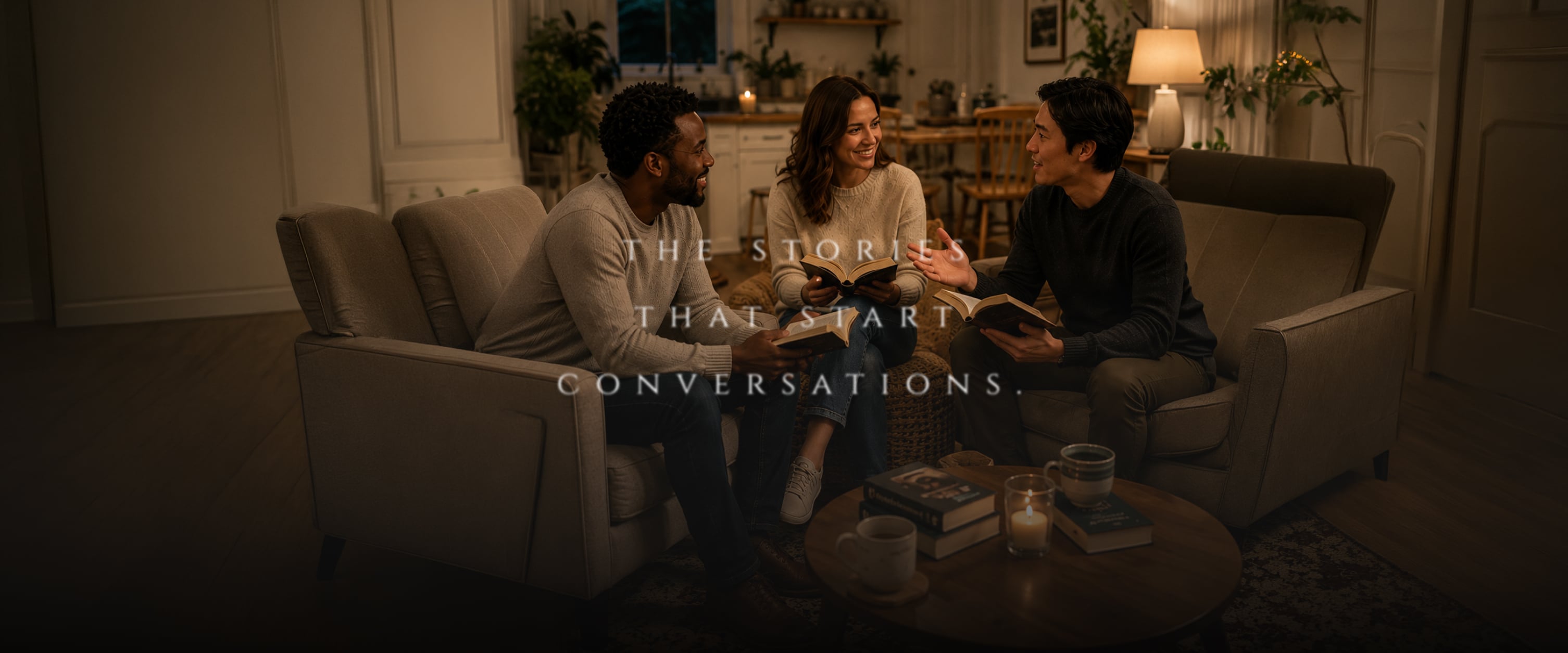
The Stories That Start Conversations
Ask any book club that's been meeting for years, and they'll tell you the same thing: the books everyone agreed on are the ones nobody remembers. The ones that caused an actual discussion, over wine, over text threads that ran past midnight, over who was right about a character nobody could quite forgive? Those are the ones that stay on the shelf, spine cracked, long after the meeting ends.
What Kind of Stories Are You Really Looking For?
Some readers pick up a book and know within the first chapter: this is what I’ve been looking for. Not because it’s comfortable, but because it’s honest. Because the characters feel real, the situations don’t resolve neatly, and the moral questions don’t have a single right answer. Whether I mean to or not, those are always the stories I end up writing.
What My Characters Have Taught Me
I thought I was just telling stories. Turns out, my characters were teaching me something too. My characters are often braver than I am. They say the things I hesitate to say out loud. They forgive when I’m still holding onto hurt. They keep going when they have every reason not to. I never expected writing fiction to become so personal. But somewhere along the way, these stories became more than plots and dialogue. Each character began carrying pieces of fear, hope, grief, strength, and questions I didn’t fully know I was asking.
Why I Keep Coming Back to These Stories
I’ve been thinking about why I return to the same kinds of stories. Not the simple answer. Not “I write suspense” or “I love thrillers.” Those are true, but they’re not the reason these themes keep showing up, book after book.
The Heart of Every Story
Every book I've written starts with the same fundamental question: What happens when ordinary people face extraordinary circumstances? I’m drawn to the moment when someone’s sense of safety shatters. When the ground shifts and they’re forced to find out who they really are. Because that's where we discover what we're made of.
January Blog 2025
A new year and new opportunities.